畫面初見|色彩、線條與記憶的劇場
藝術家介紹|Artist Profile
佐藤公聰(1948–2018)生於日本秋田,1970年畢業於武藏野美術大學油畫科,曾隨福田稔修習陶藝。1977年遠赴巴黎國立高等美術學校深造,浸淫於歐洲現代藝術思潮,重新省思構圖、色彩與形式。畢卡索、馬諦斯、布拉克及波納爾等大師的藝術語彙,在佐藤筆下並非生硬引用,而是內化為建立個人風格的厚實養分。
Koso Sato (1948–2018) was born in Akita City, Japan. He graduated from the Oil Painting Department of Musashino Art University in 1970 and also studied ceramics under Minoru Fukuda. In 1977, he moved to Paris to study at the École Nationale Supérieure des Beaux-Arts, where he reconsidered composition, color, and form within the environment of European modern art. The influence of Picasso, Matisse, Braque, and Bonnard became not a matter of quotation, but a foundation through which Sato developed his own painterly language.
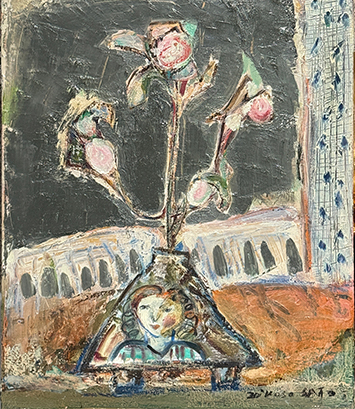
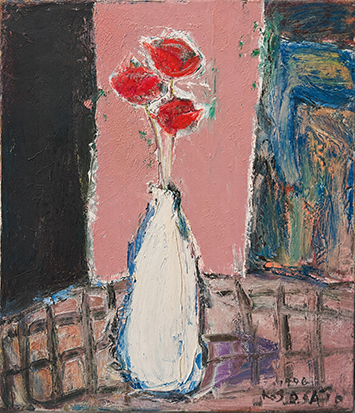
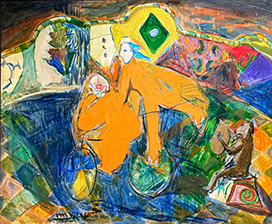
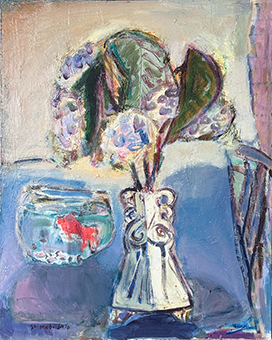
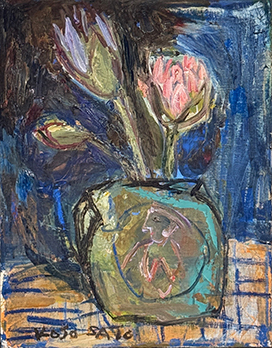
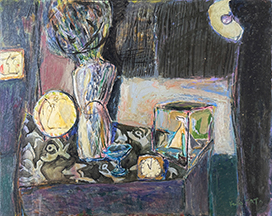
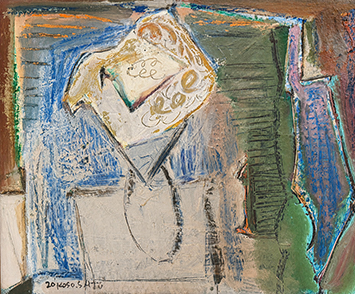
佐藤的作品洋溢浪漫明亮氣息。花瓶、樂器、魚缸或遠方月色,不再僅是具象題材,更如記憶重新編碼後的符號。線條流轉,色塊於碰撞中牽引,畫面動勢磅礴卻節奏沉穩。敘事與抽象在此交融,賦予畫作表現主義的熱烈,同時延展出如夢似幻的空間張力。
Sato’s paintings carry a romantic and luminous temperament. Vases, musical instruments, fishbowls, moons, interior corners, and distant landscapes are not merely recognizable subjects; they become signs rearranged by memory. Lines wander, color fields collide and pull against one another, and the image remains rhythmically composed even when charged with motion. Between narrative and abstraction, his work holds both expressive intensity and a dreamlike sense of space.
1989年起,佐藤頻繁往返台日兩地並多次辦展。台灣地景、民情與光影意象融入創作,轉譯為極具東方情調的現代繪畫。細察其作,可見歐洲現代主義的形式精準交會亞洲日常的色彩與節奏,並帶入一絲幽默與神祕感,淬鍊出鮮明獨具的「佐藤式風格」。
From 1989 onward, Sato held numerous exhibitions in Taiwan and maintained a long-standing connection between Taiwan and Japan. Taiwan’s landscapes, local life, and changing light entered his paintings and were transformed into a modern pictorial language with an unmistakably Eastern resonance. Across these works, one sees how Sato brought the formal lessons of European modernism into contact with the color, rhythm, humor, and mystery of Asian daily life, forming a distinctive “Sato style.”
Selected Works|作品欣賞