畫面初見|攝影式凝視與繪畫的溫度
藝術家介紹|Artist Profile
陳昭宏(Hilo Chen,b.1942)生於臺灣宜蘭,早年曾受李仲生啟發,並成為「東方畫會」最年輕的成員之一。其創作起點與臺灣現代藝術的抽象脈絡密切相關,然而1968年前往巴黎與紐約後,他在歐美當代藝術現場中重新思考繪畫與真實的關係。特別是在觀看安格爾《瓦平松的浴女》之後,人體、光線與皮膚質地逐漸成為他繪畫語言中最具標誌性的核心。
Hilo Chen (b.1942) was born in Yilan, Taiwan. In his early years, he was influenced by Li Chung-Sheng and became one of the youngest members of the Ton Fan Group. His artistic beginnings were closely connected to the abstract current of Taiwanese modern art. After moving to Paris and New York in 1968, Chen reconsidered the relationship between painting and reality within the context of European and American contemporary art. His encounter with Ingres’ The Bather of Valpinçon became a decisive reference, leading the human body, light, and the texture of skin to become central to his painterly language.
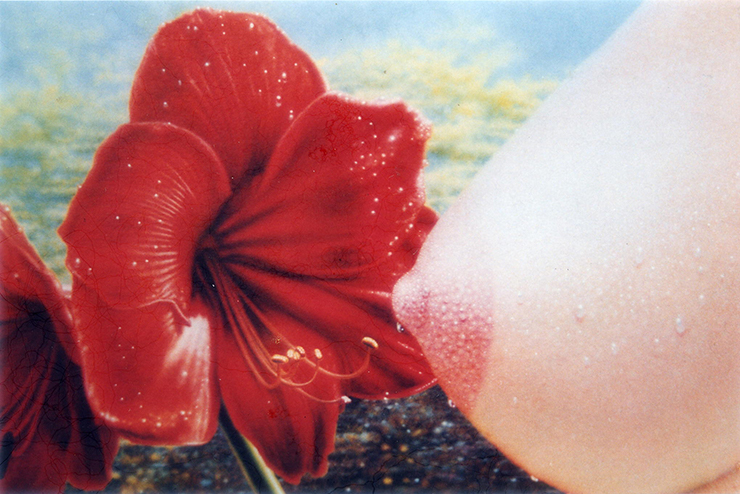
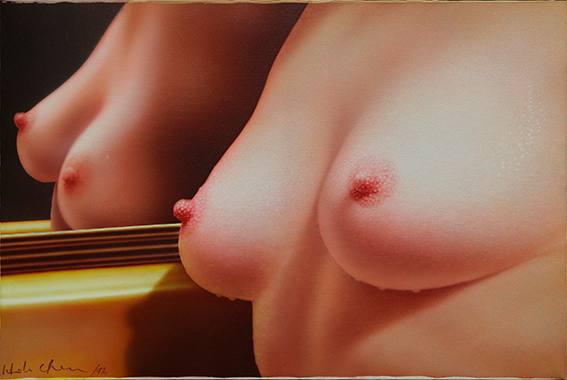
1970年代,照相寫實主義於紐約興起,陳昭宏在此藝術浪潮中建立鮮明而獨立的位置。他以噴槍與細膩畫筆結合,將皮膚的光澤、汗珠、毛孔、髮絲與色溫轉化為高度感官化的繪畫表面。這些細節看似冷靜精準,實則蘊含漫長的勞動與凝視,使作品在攝影的瞬間捕捉與繪畫的時間厚度之間形成張力。
During the rise of Photorealism in New York in the 1970s, Chen established a distinctive and independent position. Combining airbrush technique with meticulous brushwork, he translated skin sheen, beads of sweat, pores, hair, and color temperature into intensely sensorial painted surfaces. These details appear cool and precise, yet they carry the weight of prolonged labor and observation, creating tension between the photographic instant and the temporal density of painting.
陳昭宏的構圖常以強烈剪裁進入人體局部,將身體轉化為具有風景性與建築感的畫面場域。明亮色彩與高對比光影在畫布上形成直接而大膽的視覺衝擊;觀者面對的並非單純的形體再現,而是一種關於觀看、距離、慾望與真實邊界的複雜經驗。身體在他的作品中既具物質性,也承載著現代都市文化中影像化觀看的心理張力。
Chen’s compositions often enter the body through forceful cropping, transforming bodily fragments into pictorial fields with the qualities of landscape and architecture. Bright color and high-contrast light generate an immediate visual impact. What viewers encounter is not simply the representation of form, but a complex experience of looking, distance, desire, and the boundary of the real. In Chen’s work, the body is both materially present and charged with the psychological tension of image-based urban culture.
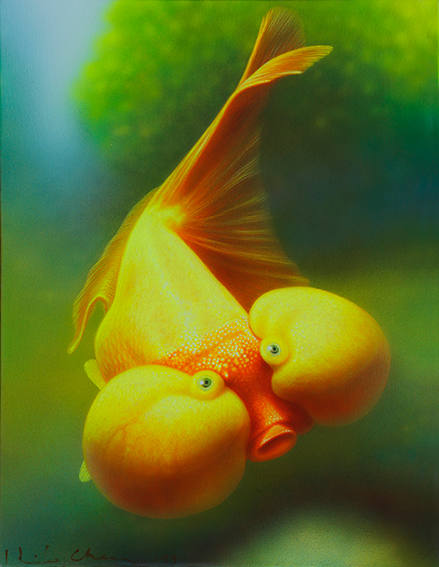
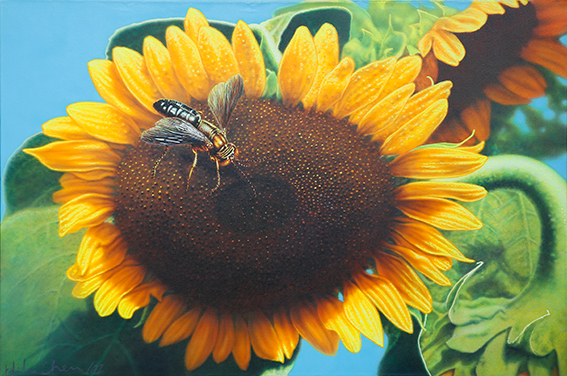
除人體題材之外,陳昭宏亦以花卉、魚與自然物象拓展其照相寫實語彙。向日葵的花瓣、蜜蜂的翅膀、金魚的鱗光與水中折射,都在精準描繪中呈現近乎超現實的生命感。這些作品顯示陳昭宏並未將寫實視為攝影的複製,而是透過繪畫將可見世界推向更濃烈、更清晰,也更具感官深度的存在狀態。
Beyond the human figure, Chen expanded his photorealist vocabulary through flowers, fish, and natural subjects. Sunflower petals, bee wings, the glimmer of fish scales, and the refraction of water are rendered with such precision that they acquire an almost surreal vitality. These works reveal that Chen does not treat realism as the duplication of photography; instead, he uses painting to intensify the visible world into a state of heightened clarity and sensory depth.
陳昭宏作品廣獲國際重要機構典藏,包括紐約索羅門 R. 古根漢美術館、聖荷西美術館、台北市立美術館、國立臺灣美術館等。他以來自東方的觀看經驗進入紐約照相寫實主義語境,在當代繪畫史中建立了跨文化而持久的藝術位置。
Chen’s works are held in major institutional collections, including the Solomon R. Guggenheim Museum in New York, San Jose Museum of Art, Taipei Fine Arts Museum, and the National Taiwan Museum of Fine Arts. Bringing an Eastern visual sensibility into the context of New York Photorealism, Hilo Chen has established a lasting cross-cultural position in the history of contemporary painting.
Selected Works|作品欣賞
以下作品呈現陳昭宏繪畫中的幾個重要面向:人體、都市、室內空間與自然物象。從早期1970年代至1990年代的作品,可見藝術家如何在照相寫實的精準表面中,持續推進身體、光線與感官經驗的繪畫深度。
The following works present several important aspects of Hilo Chen’s practice: the body, the city, interior space, and natural subjects. From the 1970s through the 1990s, these paintings reveal how Chen developed the depth of bodily, luminous, and sensory experience within the precise surface of Photorealism.