Rhino Lady & Rhino Boy | 犀牛小姐・犀牛小子
語音導覽 Audio Guide
犀牛小姐・犀牛小子
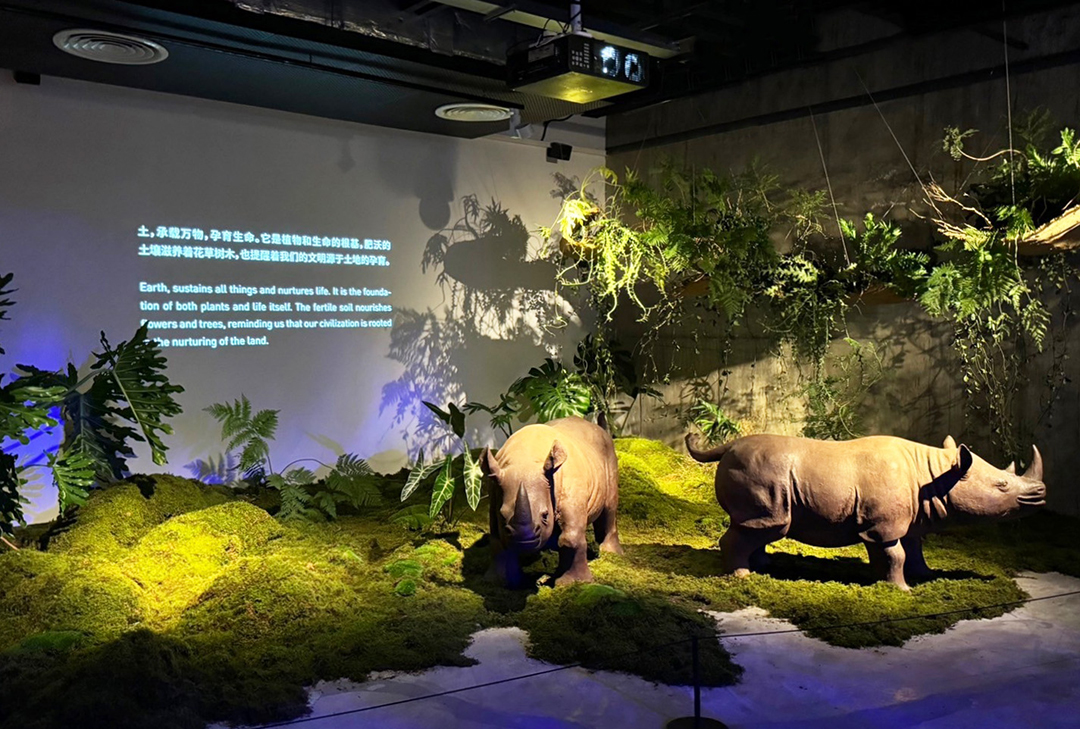
早期「犀牛家族」作品,呈現悠然生活於野外的場景
犀牛小姐 Rhino Lady|2012
鐵雕 Iron sculpture|170 × 75 × 60 cm
犀牛小子 Rhino Boy|2010
鐵雕 Iron sculpture|164 × 55 × 86 cm
《犀牛小姐》與《犀牛小子》為施力仁較早期的「犀牛家族」作品。兩件作品在展場中以自然植栽與地景語彙構成一段安靜的棲地場景,使犀牛不再以對抗姿態出現,而以更貼近日常的方式回到「生活」本身:行走、停留、呼吸,與環境共處。
《犀牛小姐》以穩定的體態與溫厚的量感呈現沉著氣息,像是守護者般安住於空間之中。相對地,《犀牛小子》以更具動勢的姿態塑造:前腳微彎,彷彿正奔跑跳躍;神情帶著古靈精怪的笑意,使整個家族系列多出一股年輕而活潑的節奏。
《犀牛小子》犀角取自孩童拇指印的圓潤形態,與「犀牛老爹」的造型語彙相互呼應,形成家族之間的視覺連結,也使親情與傳承自然地嵌入作品結構之中。兩件作品於2024年上海靜安雕塑公園《靈犀再現—施力仁雕塑藝術展》展出,邀請觀者在公共空間的行走之間,遇見一段溫柔而堅定的生命情景。
Rhino Lady (2012) and Rhino Boy (2010) are early works from SHIH Li-Jen’s Rhino Family series. Presented within a nature-inspired installation, the two sculptures depict rhinoceroses living at ease in their environment—walking, pausing, and inhabiting space in a quiet rhythm of everyday life rather than confrontation.
Rhino Lady conveys steadiness through a grounded stance and a sense of weight, suggesting calm presence and attentiveness. By contrast, Rhino Boy introduces movement and vitality: with slightly bent forelegs, the figure appears ready to run or leap, its expression carrying a playful, curious energy that brings youthfulness to the series.
The horn of Rhino Boy is shaped from a rounded, childlike thumbprint, visually echoing the form language of “Rhino Dad” and establishing a familial continuity within the series. Through this shared sculptural vocabulary, relationships of care, growth, and inheritance are embedded into the structure of the work itself. Exhibited in 2024 at Jing’an Sculpture Park in Shanghai, the two sculptures invite viewers to encounter a gentle yet resilient life scene within public space.