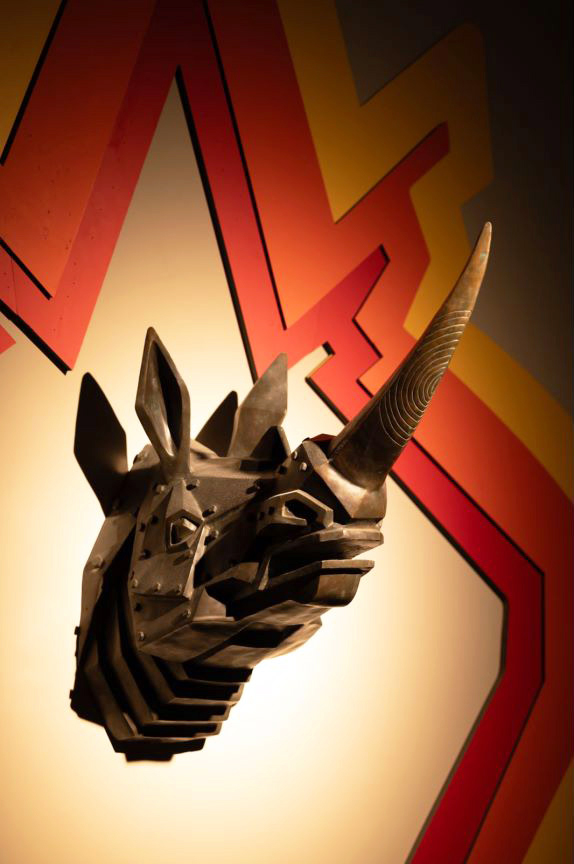
Head of Harley King Kong |
金鋼獸首(銅)
| 語音導覽 |
銅 Copper 80 x 36 x 74cm |
《金鋼獸首(銅)》延續施力仁「金鋼」系列的創作語彙,以幾何硬邊與工業鉚釘構成犀牛之首。犀首高昂,目視前方,作品並非對自然形貌的再現,而是將動物形體轉化為一種承載歷史與文化記憶的結構。
在華夏文化中,「獸首」從來不只是裝飾性的圖像。圓明園十二生肖獸首的流散,使其成為近代歷史中關於文明、權力與失落的集體記憶。犀牛亦在歷代王朝中象徵尊貴與守護,其稀有性更被視為身份與制度的象徵。白居易詩中所言「通天白犀帶」,所指的不僅是服飾風尚,而是一種階序與價值的體現。
藝術家以當代雕塑語言,將犀牛獸首重鑄為銅,保留金屬的重量與時間感。犀角筆直指向天際,並非宣示力量或征服,而是一種對方向與精神的堅持。作品既不回溯古典,也不沉溺懷舊,而是在當下提出提問:當文明不斷被拆解與重構,人類是否仍能意識到自身所繼承的歷史重量,以及必須承擔的責任。
Head of Harley King Kong (Bronze) continues SHIH Li-Jen’s King Kong series, constructed through geometric hard edges and industrial rivet structures. The raised rhino head, gazing forward, is not a naturalistic depiction but a structural embodiment of memory, history, and cultural symbolism.
In Chinese cultural history, animal heads have never functioned merely as decorative totems. The dispersal of the bronze zodiac heads from the Old Summer Palace transformed them into enduring symbols of civilization, power, and loss. The rhinoceros, in particular, has long represented nobility, protection, and rarity within imperial culture. Bai Juyi’s reference to the “white rhinoceros belt” speaks not only of status, but of an entire social order and value system..
Recast in bronze through a contemporary sculptural language, the rhino head retains a sense of material weight and temporal presence. Its horn rises skyward—not as an assertion of domination, but as an orientation toward resolve and continuity. Neither nostalgic nor retrospective, the work poses a quiet yet persistent question: when civilization is repeatedly dismantled and rebuilt, do we still recognize the weight of what we inherit—and what we are responsible for carrying forward?