Beast Head |
獸首
| 語音導覽 |
2009 銅 Bronze 尺寸:請依作品資料更新 |
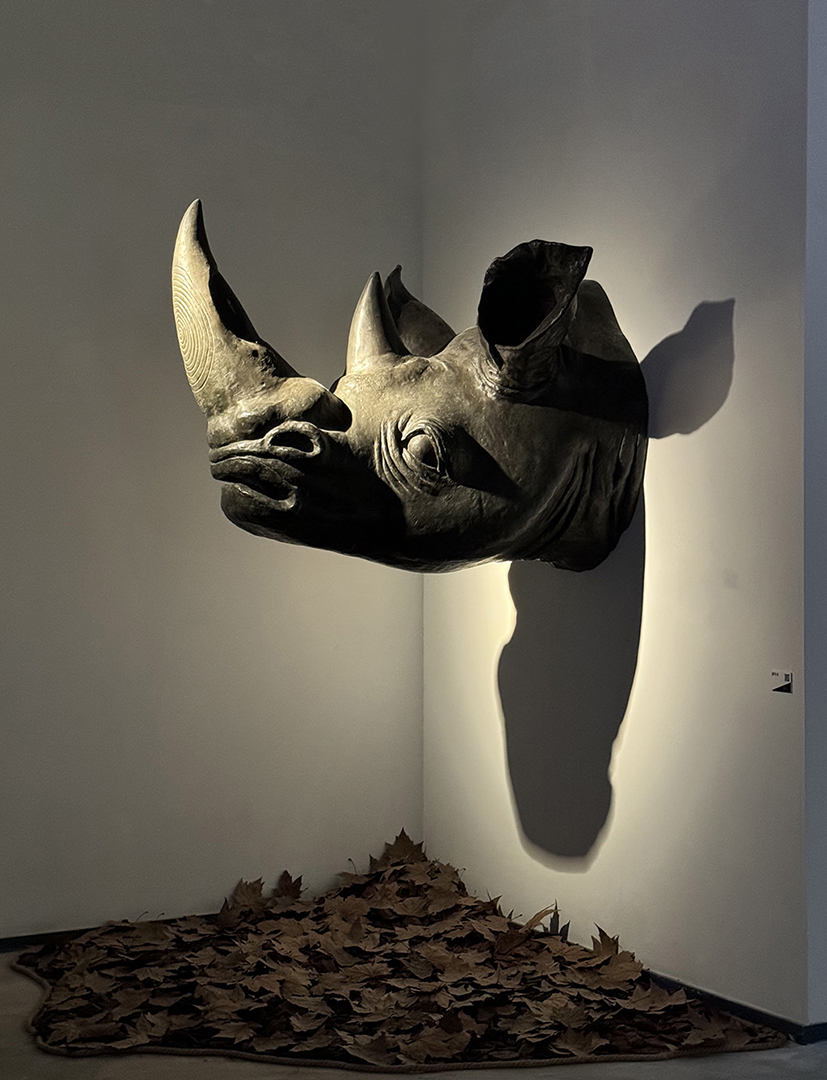
《獸首》完成於2009年,是施力仁最早以「獸首」為題的創作,造型取自「犀牛老爸」。作品刻意僅保留頭部,並以懸掛於牆面的方式呈現,其形式呼應歐美狩獵文化中常見的戰利品展示——動物在被獵捕後,頭部被製成標本,成為象徵征服與佔有的物件。
然而,這樣的形式在作品中被反向使用。當完整的身軀消失,只留下被固定於牆面的頭部,觀看不再指向榮耀,而轉為一種無法迴避的失衡與凝視。作品所呈現的,並非勝利的標記,而是對獵捕慾望本身的反思。
作品以青銅鑄造,質地渾厚,體量沉重,卻仍無法抵抗人類的征服意志。犀牛角成為視覺焦點,同時指向悲劇的根源——正因角的價值,犀牛才不斷成為被追逐與獵殺的對象。看似強健的生命,在制度、慾望與市場機制之下,顯得格外脆弱。
回望創作脈絡,《獸首》可視為日後「金鋼犀牛」與「金鋼獸首」系列的起點。作品並不試圖提出答案,而是在安靜的狀態中留下提問:當人類以征服來確認自身的位置時,是否也正在失去對生命本身的敬畏。
Beast Head was completed in 2009 and marks the origin of SHIH Li-Jen’s exploration of the animal-head motif. Derived from the form of Rhino Dad, the sculpture isolates the head and presents it as a wall-mounted object—a format that deliberately references the tradition of trophy displays in Western hunting culture, where animal heads are exhibited as symbols of conquest and possession.
In this work, that familiar visual language is inverted. With the body removed and only the head remaining, the display no longer signifies triumph, but instead produces a sense of imbalance and confrontation. What appears is not a celebration of victory, but a suspended presence that asks the viewer to reconsider the act of hunting itself.
Cast in bronze, the sculpture carries a sense of physical weight and permanence. Yet this material solidity stands in stark contrast to the vulnerability it reveals. The rhinoceros horn becomes the visual focus of the work, while simultaneously pointing to the source of its tragedy—valued, pursued, and destroyed because of it. A powerful body is reduced to a fragment, exposing how life is rendered fragile under systems of desire, domination, and extraction.
Seen in retrospect, Beast Head serves as the point of departure for the later King Kong Rhino and Head of King Kong series. Rather than offering conclusions, the work remains open-ended, leaving a quiet but persistent question: when conquest becomes a way of defining human presence, what is lost in our relationship to life itself?