Shih Li-Jen

Artist Biography

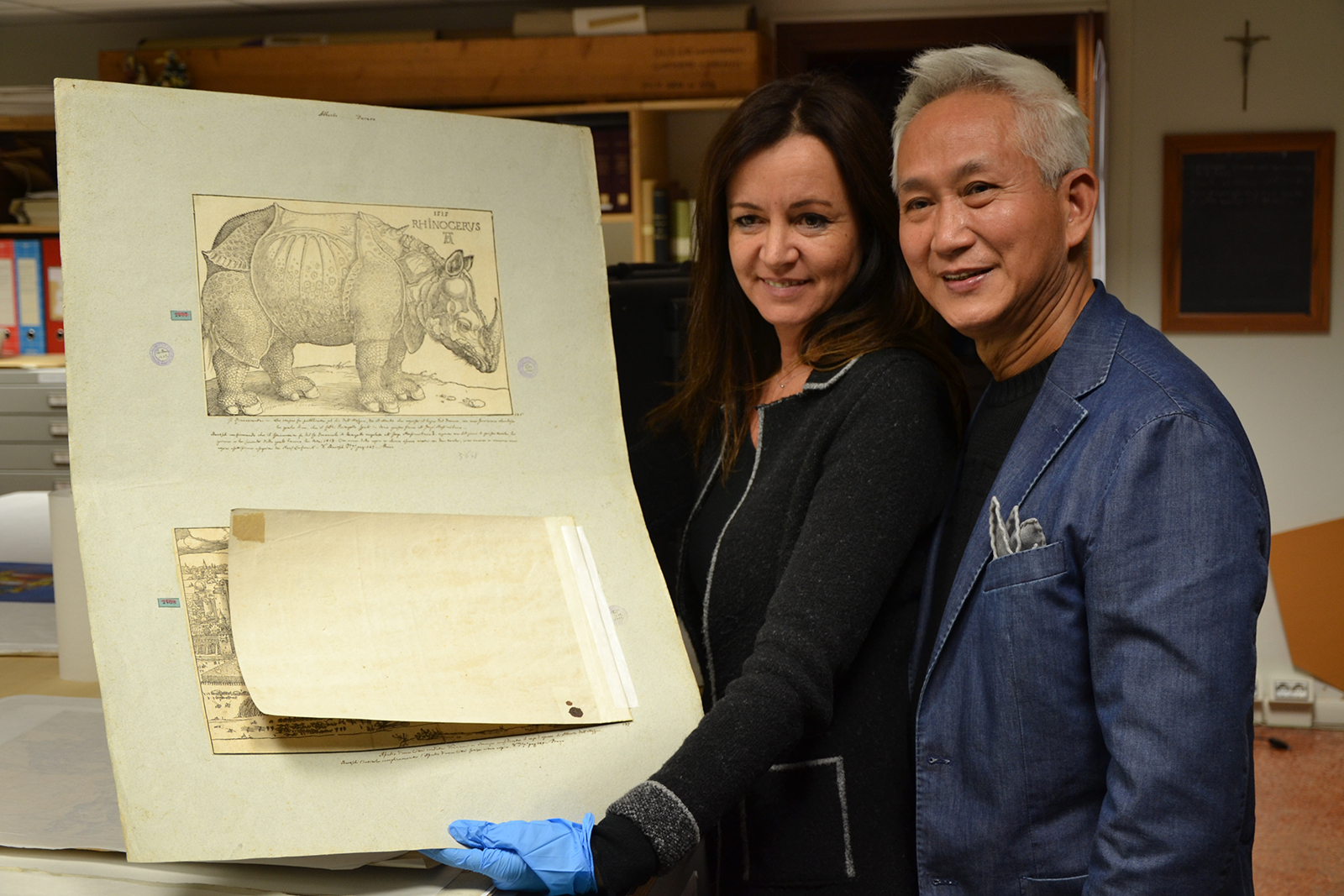
施力仁(Shih Li-Jen)為台灣當代雕塑家,長年以動物形象作為創作的重要線索,其中又以犀牛最具代表性。對他而言,犀牛不只是自然界中的古老生命,也是一種承載力量、仁性、文明記憶與生態省思的精神象徵。其代表作《金鋼犀牛》系列融合東方文化意涵與當代雕塑語彙,從個體生命的堅韌延伸至人類文明與自然共存的深層思考。這條創作之路並非晚近才形成,而是早在童年對手作、泥塑與自然萬物的感受之中,便已埋下最初的種子。

Shih Li-Jen is a Taiwanese contemporary sculptor best known for his sustained exploration of animal imagery, with the rhinoceros standing at the center of his artistic practice. For the artist, the rhino is more than an ancient creature of the natural world; it is a symbolic form that embodies strength, benevolence, cultural memory, and ecological reflection. His acclaimed King Kong Rhino series brings together Eastern cultural sensibilities and contemporary sculptural language, extending from the resilience of individual life toward a broader meditation on human civilization and coexistence with nature. The roots of this sculptural vision can be traced back to his early sensitivity to handmade form, clay, and the natural world in childhood.

Next
Artistic Path

Artistic Path

施力仁的藝術之路,建立在長年推動藝術、觀看藝術與思考藝術的積累之上。早年他深耕畫廊經營與展覽策劃,長期與國內外藝術家、作品與展覽現場密切接觸,逐步形成對藝術史、空間語言與時代感的敏銳理解。這段經驗使他不僅熟悉作品該如何欣賞,也更深刻體會藝術如何在不同文化與社會之間建立連結。然而,在策展人、畫廊經營者與推動者等多重角色之外,創作始終沒有真正離開他的生命。從早年對書寫、繪畫與手捏泥塑的投入,到日後走向大型雕塑實踐,他最終回到創作者本身,將多年所累積的視野與感受,轉化為兼具文化厚度、公共性與個人精神性的雕塑語言。

Shih Li-Jen’s artistic path is grounded in decades of engaging with art through its presentation, interpretation, and circulation. In his early career, he was deeply involved in gallery practice and exhibition planning, working closely with artists, artworks, and exhibition contexts in Taiwan and abroad. Through this long-term engagement, he developed a keen sensitivity to art history, spatial language, and the cultural conditions through which art is experienced. Yet beyond his many roles as gallerist, curator, and cultural facilitator, the impulse to create never truly left him. From early experiments with drawing, calligraphy, and hand-shaped clay to the development of large-scale sculpture, he gradually returned to the position of the artist, transforming accumulated vision and lived experience into a sculptural language marked by cultural depth, public presence, and personal conviction.

Next
The Rhino as a Core Motif

The Rhino as a Core Motif

犀牛在施力仁的創作中,一直佔有極重要的位置。它不只是反覆出現的形象,更是貫穿其雕塑思考的核心意象。多年來,施力仁以不同的造型、姿態與材質,發展出屬於自己的「犀牛百家姓」,使這一母題在延續之中不斷生成,也形成他最具辨識度的創作脈絡。
這份關注,來自他對華夏文明深層線索的重新發掘。從《山海經》的記述,到歷代犀尊器物在今日博物館體系中仍備受珍視,都說明犀牛在古代文化中曾具有獨特而重要的位置。作為遠古生命的象徵,犀牛本身帶有厚重的時間感;東亞文化裡亦有牠足以力敵大象的傳說。對施力仁而言,真正使他長久著迷的,並不只是犀牛所象徵的力量,而是牠身上那種沉穩、堅韌、內斂而不張揚的氣質。這樣的氣質,恰恰與他所追求的精神性相互呼應,也使犀牛成為他寄託生命、文明與自然思索的重要形象。
因此,在施力仁筆下,犀牛早已不限於一般動物形象的描寫,而逐漸成為一種綜合性的精神象徵。它連結生命意識、生態關懷、文化記憶與內在倫理,也映照出人類文明一路發展至今,始終無法迴避的張力:力量與仁性、進步與代價,往往並存。透過這一母題,施力仁不僅建立起鮮明而持續展開的藝術語彙,也讓他的雕塑超出單純的形體塑造,進一步引人思考,人類在不斷推進文明的同時,是否仍能與自然維持一種深刻而平衡的關係。

The rhinoceros occupies a central position in Shih Li-Jen’s artistic practice and serves as one of the defining motifs of his sculptural language. Across the years, he has developed a wide range of rhino forms through variations in posture, material, and scale, allowing this motif to evolve into a sustained body of work that is both conceptually coherent and visually distinctive.
Shih’s engagement with the rhinoceros is rooted in his renewed attention to the cultural memory of Chinese civilization. From references in the Classic of Mountains and Seas to ancient rhinoceros-shaped ritual vessels now preserved in major museum collections, the animal once held a significant place in the historical imagination. As a creature associated with deep time, the rhinoceros carries a strong sense of prehistoric presence; in East Asian tradition, it was also linked to exceptional strength. For Shih, however, its significance lies not only in power, but in its qualities of steadiness, resilience, and restraint. These qualities resonate closely with the spiritual and cultural temperament he seeks in his work, making the rhinoceros a compelling vehicle through which to reflect on life, civilization, and the natural environment.
In Shih Li-Jen’s sculpture, the rhinoceros extends beyond animal representation to become a broader symbolic form. It connects life consciousness, ecological awareness, cultural memory, and ethical reflection, while also revealing a persistent tension within human civilization: that strength and benevolence, progress and cost, often coexist. Through this motif, Shih has established a sculptural vocabulary that is at once highly recognizable and continually developing. More importantly, he uses it to pose a larger question—whether, in the course of advancing civilization, humanity can still maintain a profound and balanced relationship with nature.

Next
Sculpture, Material, and Form

Sculpture, Material, and Form

施力仁的雕塑語言,建立在對材質、量體與形式結構的長期探索之上。無論是青銅、不鏽鋼,或彩鈦等不同媒材,他都不將材料僅僅視為技術層面的選擇,而是視為形象生成與精神傳達的重要部分。青銅所呈現的沉著與厚度,不鏽鋼所帶出的冷冽、反射與時代感,以及彩鈦所具有的光澤、色層與未來感,都在他的作品中各自發揮作用,形塑出不同的空間氣質與觀看經驗。
在形式上,施力仁的雕塑常在圓融與力量之間取得平衡。他擅長以飽滿而凝聚的量體,營造穩定的重心與內在張力,讓作品在靜止之中仍保有向外擴張的能量。其造型既保有動物原初的生命感,也經過提煉、簡化與重構,使之轉化為更具象徵性與公共性的雕塑形式。從表面肌理到整體輪廓,從局部結構到空間中的尺度感,施力仁始終關注雕塑如何作為一種可被感知、凝視與記憶的存在,進而在物質之中承載精神,在形式之中生成意義。

Shih Li-Jen’s sculptural language is grounded in a sustained exploration of material, mass, and formal structure. Whether working in bronze, stainless steel, or titanium-coated surfaces, he does not treat material as a purely technical choice, but as an essential component in the formation of image and meaning. The density and gravity of bronze, the reflective sharpness and contemporary character of stainless steel, and the luminosity and futuristic quality of colored titanium each play a distinct role in shaping the spatial presence and perceptual experience of his works.
Formally, Shih’s sculptures often achieve a careful balance between fullness and force. He works with compact, concentrated volumes that establish both stability and inner tension, allowing the work to retain a sense of expansion even in stillness. While his forms preserve something of the primal vitality of animal life, they are also refined, simplified, and restructured into sculptural images of greater symbolic clarity and public resonance. From surface treatment to silhouette, from structural detail to the experience of scale in space, Shih remains concerned with how sculpture can be felt, contemplated, and remembered—how matter may carry spirit, and how form may become a vehicle of meaning.

Next
Public Art and International Presence

Public Art and International Presence

施力仁的雕塑長期走出展覽空間,進入城市廣場、公共園區與開放性的建築場域之中。對他而言,公共藝術的意義,不在於尺度的放大或環境的裝飾,而在於作品能否真正進入日常生活,與人、空間及時間建立關係。當雕塑被放入公共環境,它所承受的已不只是凝視,而是人群流動、城市節奏與場所記憶的共同作用。
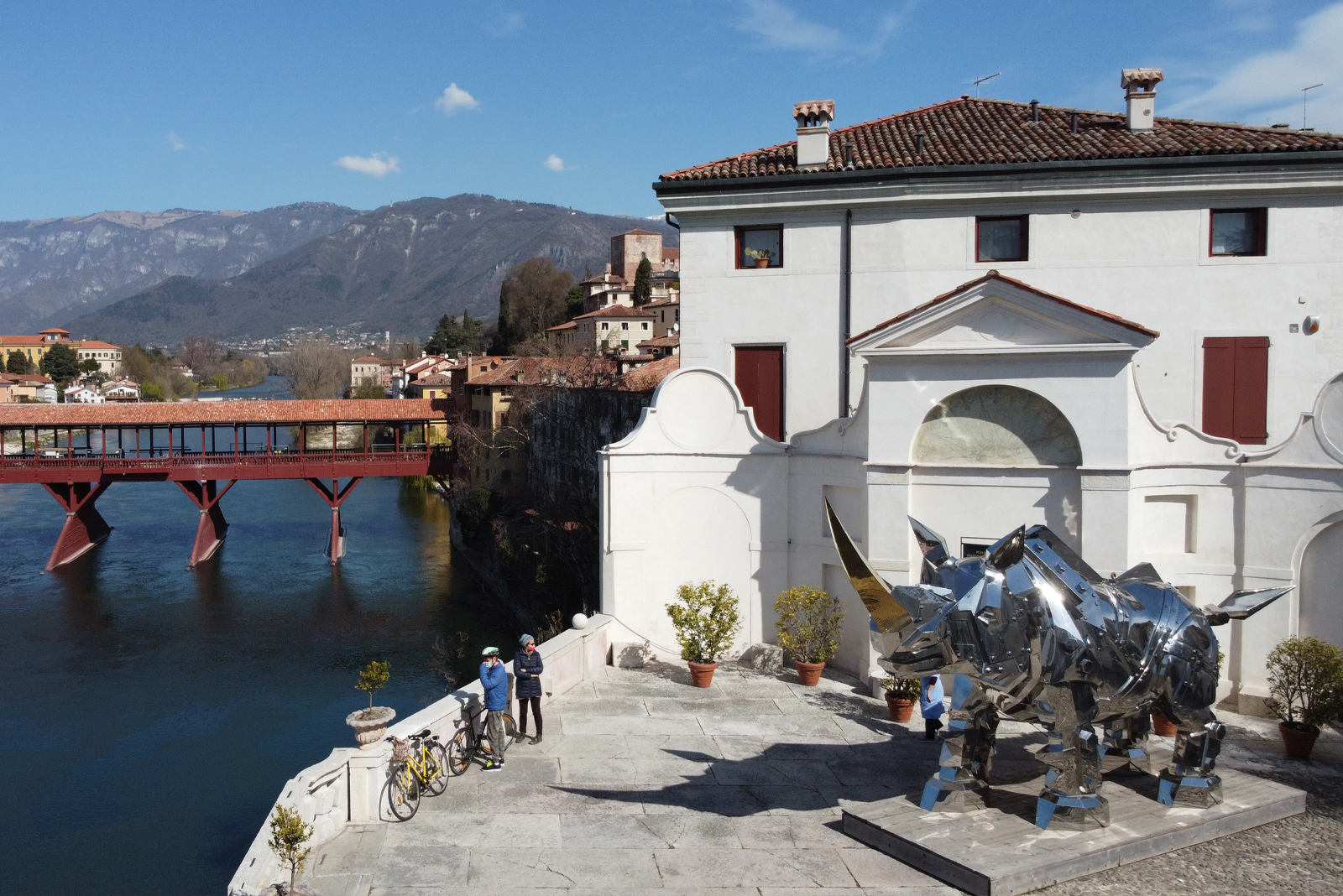
多年來,施力仁的作品曾在台灣、上海、威尼斯與巴薩諾等不同場域中呈現,逐漸形成鮮明的公共雕塑脈絡。無論是在歷史空間、城市街區或文化景觀之中,他的犀牛雕塑都展現出穩定而強烈的存在感,並因應不同環境生成新的觀看經驗。也正因如此,他的作品得以超越單一地域的閱讀方式,在不同城市裡持續被感知、被記憶,也不斷召喚人們重新思考文明與自然之間的關係。

For many years, Shih Li-Jen’s sculpture has extended beyond the exhibition space into urban plazas, public parks, and open architectural settings. For him, the significance of public art lies not in enlarging scale or embellishing an environment, but in whether a work can genuinely enter everyday life and establish a relationship with people, space, and time. Once placed in a public setting, sculpture is shaped not only by the gaze of viewers, but also by the movement of people, the rhythm of the city, and the memory of place.
Over the years, Shih’s works have been presented in Taiwan, Shanghai, Venice, and Bassano del Grappa, gradually forming a distinct trajectory within public sculpture. Whether situated in historical settings, urban streetscapes, or cultural landscapes, his rhino sculptures convey a steady and powerful presence while generating new modes of perception in response to each environment. In this way, his work moves beyond a single regional framework and continues to be experienced and remembered across different cities, prompting renewed reflection on the relationship between civilization and nature.

Next
Key Works and Series

Key Works and Series

施力仁的創作雖以犀牛最為人熟知,但他的作品並不是圍繞單一形象反覆變化而已。多年來,他讓犀牛這個母題不斷分化、生長,逐漸發展出一系列彼此相關、卻各有性格的作品脈絡。不同系列之間,有的偏向力量與結構,有的帶有親和與圓融,也有些更貼近文化象徵與時代感,共同構成他今日多層次的雕塑面貌。
其中,《金鋼犀牛》系列可說是最具代表性的創作之一。這一系列以犀牛為基礎,融入厚實的量體、結構性的張力與鮮明的精神象徵,使作品在公共空間中具有強烈的存在感,也成為施力仁最具辨識度的藝術形象。《犀牛家族》則在整體語彙中展現出另一種面向。相較於金鋼犀牛所強調的力量與意志,這一系列更著重生命之間的依附、守護與延續,量體圓潤,氣質溫厚,帶有家庭與群體的情感投射。《元寶犀牛》則結合東方文化中吉祥、富足與圓滿的象徵,讓作品在親近之中仍保有凝聚的雕塑力量。
除了犀牛系列之外,施力仁也持續發展其他作品,如《哈雷金鋼》、《赤兔戰馬》與《星緣崛起》等,進一步擴展他在動物形象、動勢結構與未來感形式上的探索。這些作品並不是從既有母題旁逸斜出,而是共同回到他長期關注的核心:生命的力量、文明的形塑,以及雕塑如何在不同時代與場域中持續生成新的意義。

Although Shih Li-Jen is best known for the rhinoceros, his work is not built on the repetition of a single image. Over the years, he has allowed this motif to branch out in different directions, gradually developing a range of interconnected series, each with its own character and emphasis. Some works foreground strength and structure, others convey warmth and intimacy, while still others engage more directly with cultural symbolism and a contemporary sense of form. Together, they reveal the layered nature of his sculptural practice.
Among these bodies of work, the King Kong Rhino series stands as one of his most recognizable achievements. Built around the image of the rhino, these works combine concentrated mass, structural tension, and a strong symbolic charge, giving them a commanding presence in public space. The Rhino Family series opens another dimension within his practice. In contrast to the emphasis on force and will found in King Kong Rhino, these works focus more on attachment, protection, and continuity, using rounded volumes and a gentler visual rhythm to evoke the emotional structure of family and collective life. The Yuanbao Rhino series introduces yet another layer, drawing on East Asian associations of auspiciousness, prosperity, and fullness while maintaining a condensed sculptural energy.
Beyond the rhino-based works, Shih has also continued to develop projects such as Harley King Kong, Swift Horse, and Rise of the Planet, extending his exploration of animal imagery, dynamic structure, and futuristic form. These works do not depart from his central concerns, but rather expand them, returning in different ways to the themes that run throughout his practice: the force of life, the shaping of civilization, and the capacity of sculpture to generate new meaning across changing times and environments.

Next
Selected Milestones

Selected Milestones

  • 2010 《犀牛家族》進駐上海靜安區,作品開始在城市公共空間中與日常生活建立長期關係。
  • 2017 《金鋼犀牛》於威尼斯雙年展平行展 PERSONAL STRUCTURES 展出,成為施力仁國際展覽的重要里程碑。
  • 2018 《金鋼犀牛》系列作品於 Palazzo Sturm 展出,進一步拓展其與歐洲歷史空間的對話。
  • 2024 受邀於上海靜安雕塑公園舉辦以犀牛為主題的展覽,呈現其多年來持續發展的雕塑語彙。
  • 2024 新作 Rise of the PlanetArt Taipei 發表,展現其近年對宇宙、生命與反射空間的思考延伸。
  • 2025 於 HTC Headquarters Gallery 舉辦展覽,呈現雕塑作品與當代企業空間之間的關係。
  • 2025 《金鋼犀牛》於義大利 Bassano del Grappa 展出,作品進一步與城市歷史地景及當地文化節奏產生連結。

  • 2010 The Rhino Family series was installed in Jing’an District, Shanghai, marking an early and lasting engagement between Shih’s sculpture and everyday urban public space.
  • 2017 King Kong Rhino was presented at PERSONAL STRUCTURES during the Venice Biennale, a key milestone in Shih Li-Jen’s international exhibition history.
  • 2018 Works from the King Kong Rhino series were exhibited at Palazzo Sturm, extending their dialogue with a historic European setting.
  • 2024 Shih was invited to present a rhino-themed exhibition at Jing’an Sculpture Park in Shanghai, highlighting the continued development of his sculptural language.
  • 2024 The new work Rise of the Planet was introduced at Art Taipei, reflecting his recent exploration of cosmos, life, and reflective spatial experience.
  • 2025 An exhibition at HTC Headquarters Gallery examined the relationship between his sculpture and the environment of a contemporary corporate space.
  • 2025 King Kong Rhino was exhibited in Bassano del Grappa, where the work entered into dialogue with the city’s historical landscape and cultural rhythm.
Next
Artistic Philosophy

Artistic Philosophy

施力仁始終將雕塑視為一種與世界對話的方式。作品之所以重要,不只因為它具有形體、材質與結構,更因為它能否在時代之中承載某種精神性的感受。無論是犀牛、戰馬,或其他動物形象,他所關注的始終不是單一題材本身,而是人如何在不斷推進的世界裡,重新思索自己與萬物之間的關係。他相信,真正有重量的雕塑,應當能在人們的生活裡留下記憶與感受,使人於經過、停留或凝視之間,重新意識到文明並非只是建造與擴張,也包含節制、理解與共存。若說藝術是一條漫長的道路,那麼施力仁始終沒有離開最初的出發點:以創作回應內心,以雕塑回應世界。

For Shih Li-Jen, sculpture is a way of entering into dialogue with the world. His works are not conceived as autonomous forms removed from lived reality, but as material presences shaped by the conditions of civilization, the transformations of nature, and the vulnerabilities of life. Whether through the image of the rhinoceros, the horse, or other animal forms, his deeper concern remains the same: how human beings might reconsider their place within a world they continue to reshape.
This is why his sculpture returns again and again to questions of force, structure, and vitality. These are not simply formal choices, but part of a larger conviction that sculpture should carry a spiritual weight within public life. It should be able to leave an impression—quiet perhaps, but lasting—through which viewers may sense that civilization is not only a matter of construction and expansion, but also of restraint, understanding, and coexistence. In this sense, Shih’s work continues to offer not just an image, but a way of thinking.

Next
Further Information

Further Information